

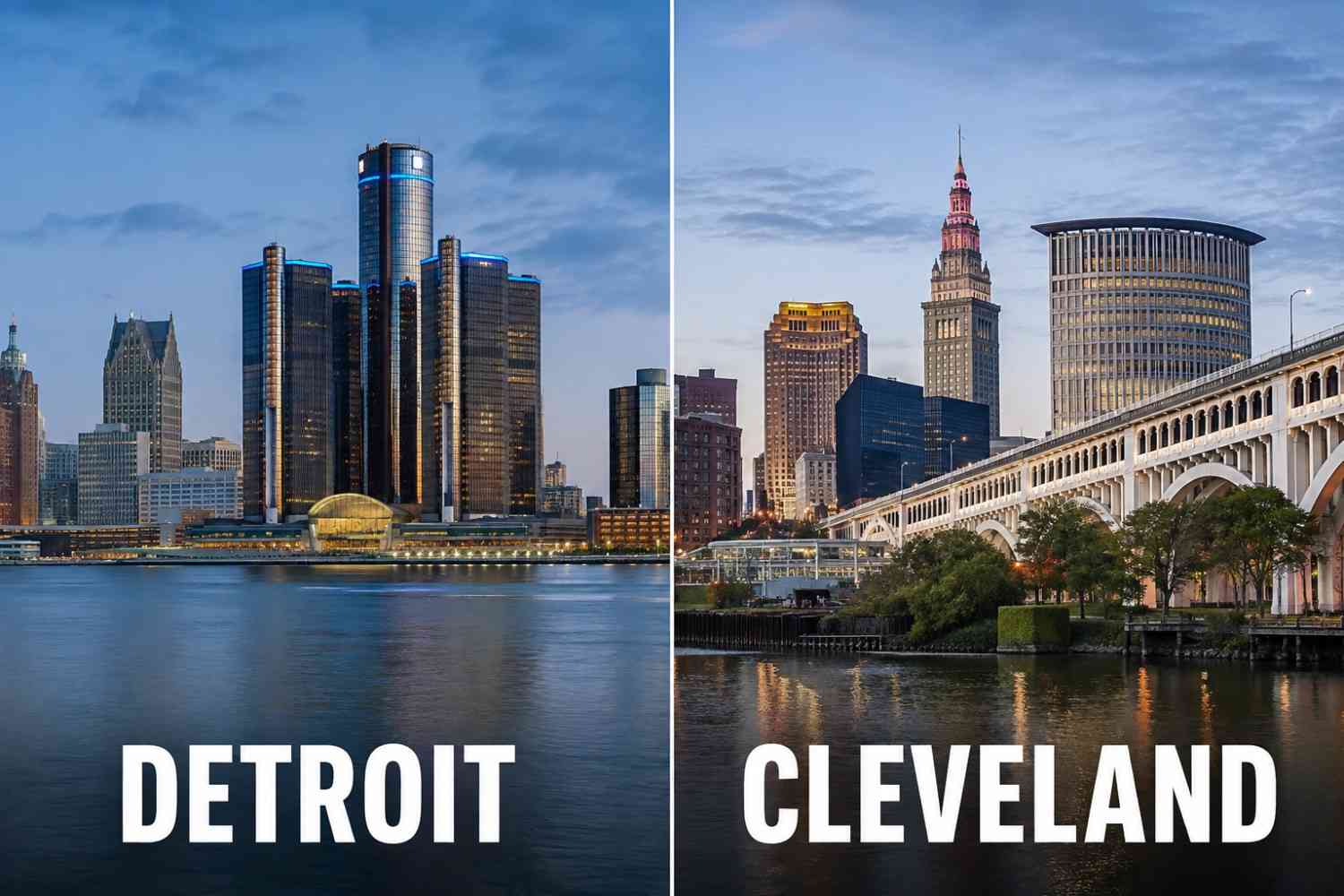
Cleveland vs. Detroit: Which Great Lakes City Is the Better Move in 2026?
They share a lake, a rust belt reputation, and the kind of loyalty from residents that borders on irrational. Cleveland and Detroit are 170 miles apart by highway, roughly three hours door to door, and they get compared constantly. If you're weighing the two for your next move, you've probably already noticed that the internet has strong opinions and thin analysis.
Here's a more useful version from a Cleveland moving and storage company that handles relocations between the two cities regularly: an honest, category-by-category comparison based on what actually matters when you're choosing a place to live.
Cost of Living
Both cities are affordable by national standards, and neither will punish your paycheck the way a coastal metro would. But Cleveland edges Detroit in overall cost of living by a meaningful margin.
Cleveland's median home price across the metro area sits around $210,000. Detroit's city-proper median is dramatically lower (often cited near $80,000), but that number is misleading because it reflects a huge range, from essentially abandoned properties to fully renovated homes in hot neighborhoods like Corktown and Midtown. Once you compare similar-quality housing in stable, livable neighborhoods, the two metros are closer than the headline numbers suggest. For a detailed side-by-side, the BestPlaces Cleveland vs Detroit comparison provides a useful data breakdown.
Rents tell a similar story. Cleveland averages around $1,100 to $1,400 for a one-bedroom. Detroit's comparable range runs $1,000 to $1,500, depending on proximity to downtown. Groceries, utilities, and transportation costs are slightly lower in Cleveland, partly because its public transit system covers more ground.
Jobs and Economy
This is where the cities genuinely diverge.
Cleveland's economy runs on healthcare, insurance, finance, and advanced manufacturing. The Cleveland Clinic and University Hospitals are the dominant employers, and companies like Progressive, Sherwin-Williams, and KeyBank provide white-collar job depth that few Midwest metros can match. For a closer look at who's hiring and what the salary math looks like, our overview of the Cleveland job market in 2026 covers all the major players.
Detroit's economy still centers on the automotive industry, but it has diversified meaningfully. Tech companies and startups have moved into downtown, and the city's entrepreneurial energy is real. Ford, GM, and Stellantis still employ tens of thousands across the metro, and the supply chain extends into engineering, logistics, and manufacturing. If you work in automotive, manufacturing, or you're building something of your own, Detroit's ecosystem may fit better.
Housing and Neighborhoods
Cleveland's housing market is more stable and predictable. You'll find a wide range across the suburbs, from affordable Parma to upscale Shaker Heights, and the inner-ring neighborhoods (Ohio City, Tremont, Lakewood) offer walkable, renovated options at reasonable prices. Most housing stock is well-maintained and sits in established communities.
Detroit's housing market is more volatile but potentially more rewarding for the right buyer. Neighborhoods like Corktown, West Village, and Midtown have seen dramatic revitalization, and early buyers in those areas have done well. But the city also has large stretches of vacancy and disinvestment, and navigating that landscape without local knowledge is risky.
If you want stability, Cleveland is the safer bet. If you want upside and can tolerate uncertainty, Detroit offers opportunities that don't exist in most American cities.
Safety
Neither city tops national safety rankings, and both require you to be neighborhood-aware rather than city-wide complacent. That said, Cleveland's overall violent crime rate runs roughly 26% lower than Detroit's, and Cleveland's suburbs consistently rank among the safest neighborhoods in Cleveland. In both cities, choosing the right neighborhood matters more than anything the city-level statistics will tell you.
Culture and Recreation
Cleveland holds a significant edge in institutional culture. The Cleveland Museum of Art (free admission, world-class collection), the Cleveland Orchestra (regularly ranked among the world's best), and Playhouse Square (the largest performing arts center outside New York) give the city cultural assets that punch well above its population.
Detroit counters with raw creative energy. Motown's legacy runs deep, the Detroit Institute of Arts houses Diego Rivera's famous murals, and the city's music, street art, and food scenes feel more spontaneous and less curated than Cleveland's. If you prefer polished institutions, Cleveland wins. If you prefer grassroots culture, Detroit has a case.
Outdoors, Cleveland benefits from Lake Erie access (beaches, boating, lakefront parks) and the Metroparks system. Detroit has the Detroit River, Belle Isle, and proximity to Michigan's lake country, but the day-to-day outdoor access within the metro is harder to match.
Weather
Both cities deal with cold, gray winters. Cleveland gets more snow, thanks to its position on Lake Erie's southern shore and the resulting lake-effect bands. Detroit winters are cold but drier. Summers in both cities are pleasant, with temperatures in the 70s and 80s and enough sunshine to make you forget February entirely.
Which City Should You Pick?
Choose Cleveland if you work in healthcare, finance, or insurance. Want a more stable housing market with well-defined suburbs. Value institutional culture, lakefront access, and an established park system. Prefer a metro where the best neighborhoods are easier to identify.
Choose Detroit if you work in automotive, manufacturing, or tech startups. Want maximum purchasing power and are comfortable navigating a less predictable housing market. Are drawn to creative energy and a city in active reinvention. See opportunity in the gaps.
If Cleveland is winning your mental scorecard, our guide to the pros and cons of living in Cleveland gives you the unfiltered local take before you commit. And if you're comparing Cleveland against the other Rust Belt rival, our Cleveland vs Pittsburgh comparison rounds out the picture.
Frequently Asked Questions
Is Cleveland or Detroit cheaper to live in?
Cleveland has a slightly lower overall cost of living, particularly in transportation and utilities. Detroit's city-proper home prices are lower on paper, but comparing equivalent neighborhoods narrows the gap considerably.
Is Cleveland safer than Detroit?
By the numbers, yes. Cleveland's violent crime rate is roughly 26% lower than Detroit's. Both cities require neighborhood-level research, and both have safe, family-friendly suburbs surrounding the urban core.
How far is Cleveland from Detroit?
About 170 miles by car, roughly a three-hour drive via I-90 and I-80. There are no direct flights, but the drive along the Lake Erie shoreline is straightforward.
Ready to Make Cleveland Home?
If Cleveland landed on the winning side of your comparison, our long distance movers handle relocations from Detroit and across the Midwest every week. We know the routes, the logistics, and the neighborhoods on the other end. Request a free quote and let's get your move on the calendar.